

Bathroom Acoustics: Creating a Peaceful Sanctuary in Busy London
In the heart of a bustling city like London, you want your home to be a retreat from the constant hum of traffic, construction, and activity. For many homeowners, the bathroom represents the ultimate private sanctuary—a place to unwind after a long day, indulge in a luxurious soak, or simply enjoy a few moments of peace at the end of the working week.
However, achieving true tranquillity isn’t just about beautiful tiles and premium fixtures. While these create a visually stunning room, a spa-like bathroom is peaceful as well as calming on the eyes. Thoughtful soundproofing strategies can transform your bathroom from merely functional to genuinely restorative.
Why Bathroom Acoustics Matter
The importance of bathroom acoustics often goes unrecognised until you’re confronted with the echo of running water, the intrusive noise of street traffic coming through windows, or the uncomfortable awareness that conversations from the next room carry through thin walls. Poor acoustics can undermine even the most beautifully designed spaces, turning what should be a calming ritual into a source of annoyance or self-consciousness.
At Hugo Oliver, we’ve designed bathrooms throughout London for over 12 years, and we’ve learned that bathroom design has to include acoustics as well as visuals. Soundproofing bathrooms can dramatically improve your daily routines, creating a tranquil bathroom space where you can truly relax without distraction or concern about disturbing others in the household.
The Acoustic Challenges of London Bathrooms
London properties present unique challenges when it comes to noise. Victorian and Edwardian homes often feature high ceilings and original floorboards that create natural sound chambers.
Period properties can also have thin partition walls between rooms, while modern developments frequently suffer from inadequate sound insulation between flats. Then there’s the external noise from busy streets, nearby railways, or flight paths that compounds these internal acoustic issues.
The materials traditionally used in bathrooms, whether tiles, porcelain, glass, or chrome, are all highly reflective surfaces that bounce sound waves rather than absorbing them. This creates an echo chamber effect that amplifies every noise, from running taps to dropped shampoo bottles.
Strategic Approaches to Soundproofing Bathrooms
Effective bathroom acoustics begin at the design stage, starting with the walls. We often recommend acoustic plasterboard or sound-insulation boards on party walls and external walls facing busy streets as these materials significantly reduce sound from being transmitted without compromising on floor space or interior design.
The flooring you choose can also help, especially in multi-storey homes or flats. Thick underlay installed beneath tiles or vinyl flooring can dramatically reduce the impact of noise travelling to rooms below, and also provides a welcome layer of warmth underfoot when you step out of the shower or tub. For en-suite bathrooms, soundproof doors with proper seals also help to maintain privacy and prevent noise travelling into the rest of the bedroom.
Absorbing Sound Within the Space
Once you’ve addressed sound through the walls and floors, the next consideration is managing sound within the bathroom itself. This is where thoughtful material choices become essential for creating a peaceful space. Textiles play a surprisingly important role here. Plush towels, bathmats, and even a carefully chosen Roman blind or curtain can absorb sound and reduce echo, especially in a larger space.
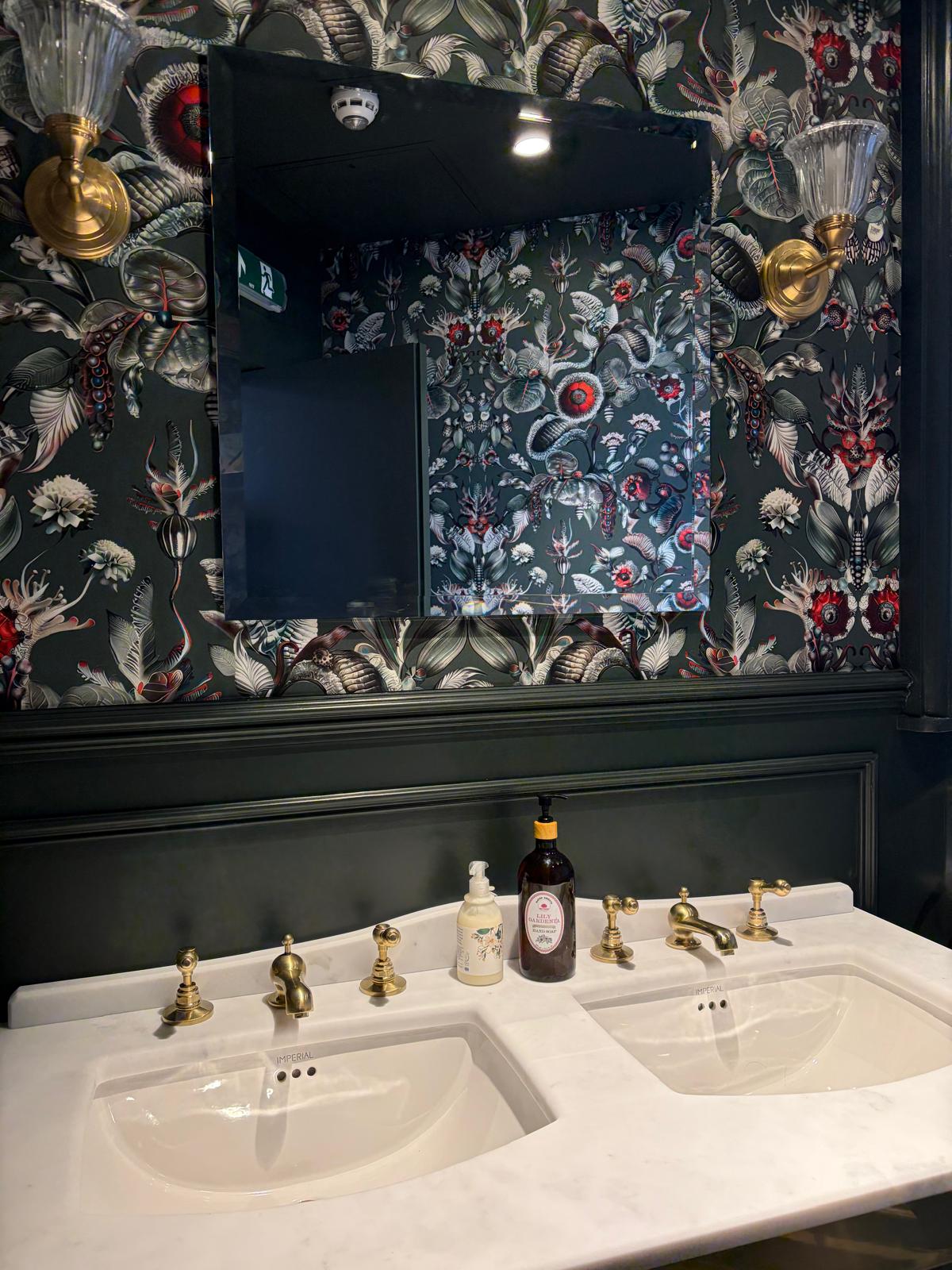
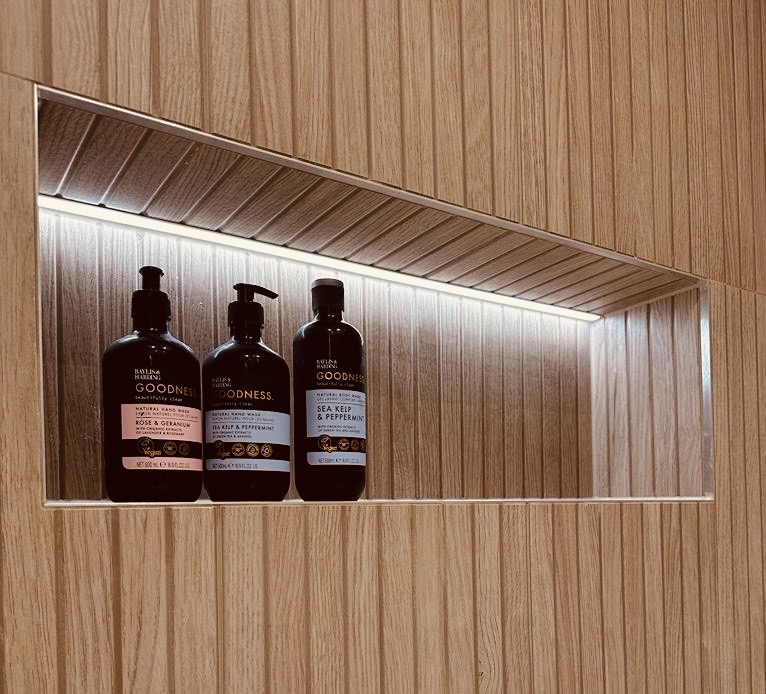
Elements like timber shelving or panelled walls, pairing paint or wallpaper with tiled splashbacks instead of relying entirely on tiled surfaces, and fabric window treatments to introduce sound-absorbing materials into the design scheme can all help to add warmth and character while also reducing unnecessary echo.
Choosing Quieter Fixtures and Fittings
The quality of your bathroom fixtures directly impacts the acoustics. Premium toilet cisterns with quiet-fill technology eliminates the traditional rushing sound of refilling, while concealed cisterns, which we frequently specify in our modern bathroom designs, naturally muffle operational noise.
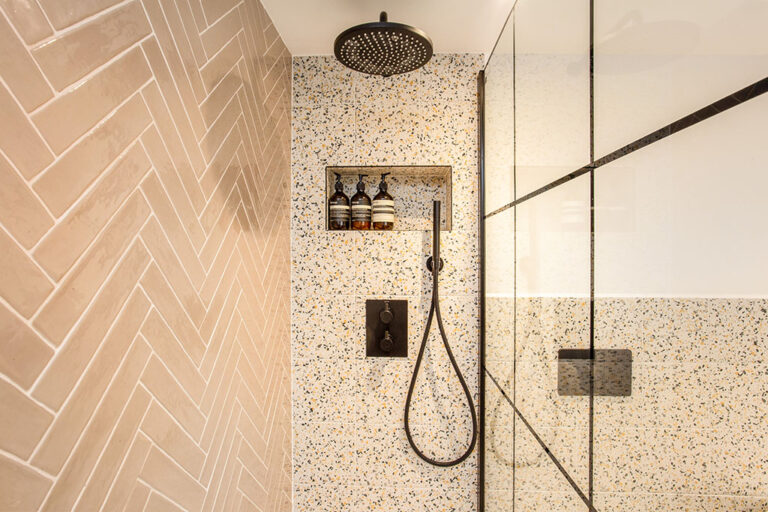
Similarly, thermostatic shower valves and mixer taps from quality manufacturers operate more quietly than basic alternatives, with precision-engineered components that reduce vibration.
Extraction fans are one of the most disruptive elements in a bathroom, but adequate ventilation is essential for preventing condensation and mould. Ultra-quiet models with decibel ratings below 30dB ensure effective ventilation without intrusive noise, and placing them away from the main bathing area minims any disturbance further.
Creating Your Peaceful Sanctuary
Whether you’re renovating a compact en-suite, transforming a family bathroom, or creating a spa-like wet room, designing with acoustics in mind ensures your new bathroom delivers the peace and tranquillity you deserve.
If you’re planning a bathroom renovation and want to discuss how we can incorporate superior acoustics into your design, we invite you to visit our showrooms or book a consultation with our team. Let us show you how the combination of beautiful design and thoughtful acoustic planning can transform your bathroom into the peaceful sanctuary you’ve been dreaming of.
Contact Hugo Oliver today to begin your journey towards a beautifully designed, wonderfully quiet bathroom that truly feels like an escape from the bustle of London life.


