

Victorian Bathroom Renovations: Respecting Period Features While Adding Modern Luxury
London is renowned for its older properties that historic charm, from Georgian townhouses to Edwardian villas. One of the property styles you’ll find throughout the capital is Victorian homes, with their high ceilings, original features and decorative mouldings that add unique and authentic character.
However, there are some period features you don’t necessarily want to hold onto – namely, outdated plumbing and tired designs in bathrooms that leave your home looking drab. The solution is to blend modern living with period bathroom features that will make day-to-day living more convenient without losing charm.
In this blog, we’ll explore ways you can approach a Victorian bathroom renovation with sensitivity and sophistication, transforming these period spaces into rooms that respect their architectural heritage.
Knowing What to Preserve
Before starting any bathroom renovation, you need to carefully assess which original features you want to keep and which can either be replaced with a replica or updated entirely. A few areas to check first are for any authentic Victorian tiles, particularly original designs that may be hidden beneath modern additions, as well as original floorboards, ceiling mouldings, and architectural details like picture rails which contribute to period authenticity in a traditional bathroom.
If you’re working with a listed building or in a conservation area, be sure to consult with heritage specialists early in the planning process. That said, even non-listed Victorian properties benefit from expert guidance on distinguishing original features from later modifications or replicas, so you know that you’re making informed decisions about what to restore, replace, or enhance.
The Hero Piece: Cast Iron Baths
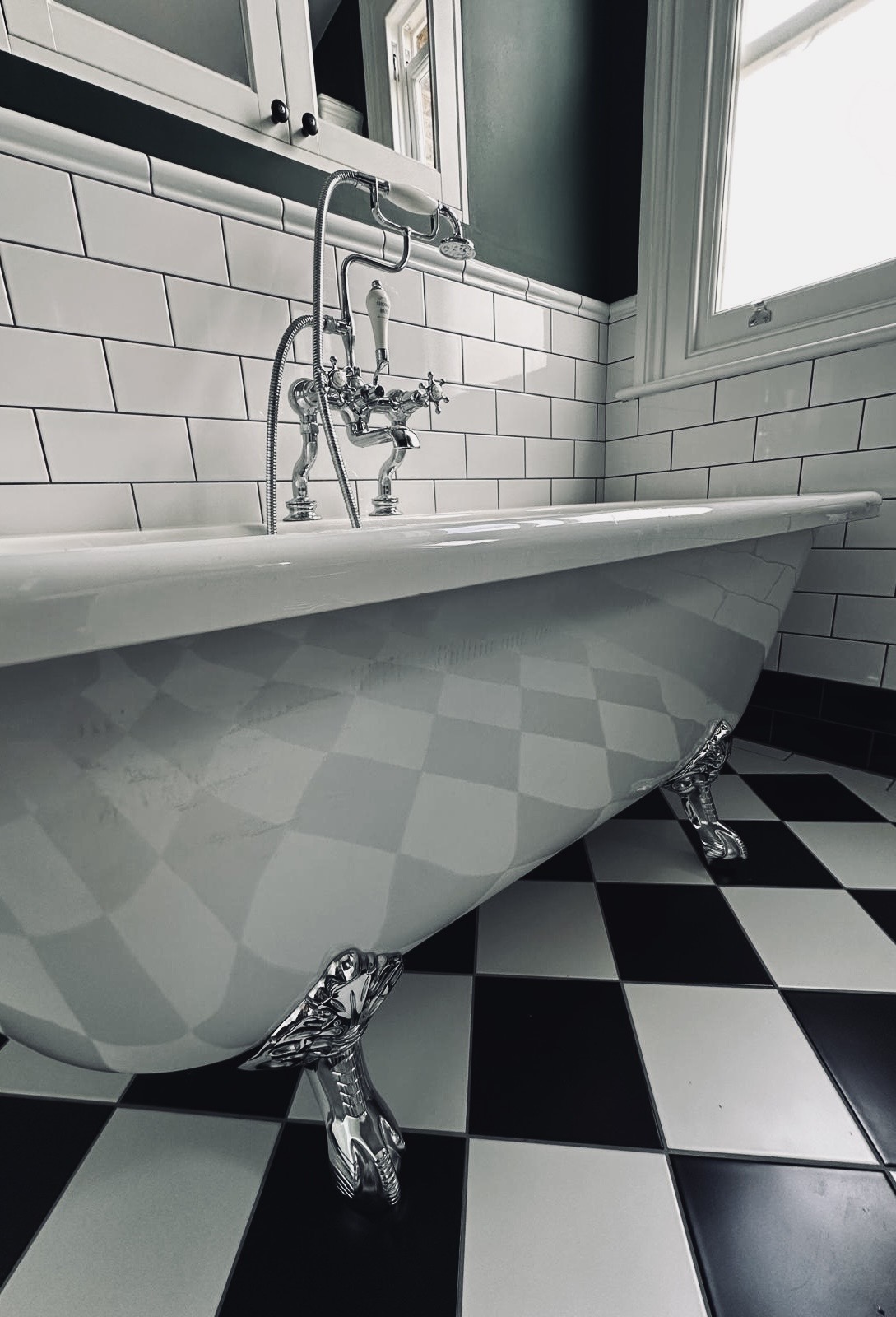
No Victorian bathroom feels complete without adding the iconic cast iron bath. These substantial freestanding tubs, often featuring elegant roll-top designs and claw feet, serve as the centrepiece of period bathroom design. If your property retains an original cast iron bath, you could have it professionally re-enamelled to restore it to pristine condition at a fraction of replacement cost.
Alternatively, you could source a reclaimed cast iron bath from architectural salvage yards for authenticity and character. For those opting for new installations, there are numerous manufacturers who produce high-quality reproductions to capture that Victorian elegance while incorporating modern improvements like improved water retention and lighter weight materials. Position your cast iron bath to maximise its visual impact, typically as a freestanding feature, and pair it with period-appropriate brass or chrome taps to complete the look.
Victorian Tiles: Patterns, Colours, and Placement
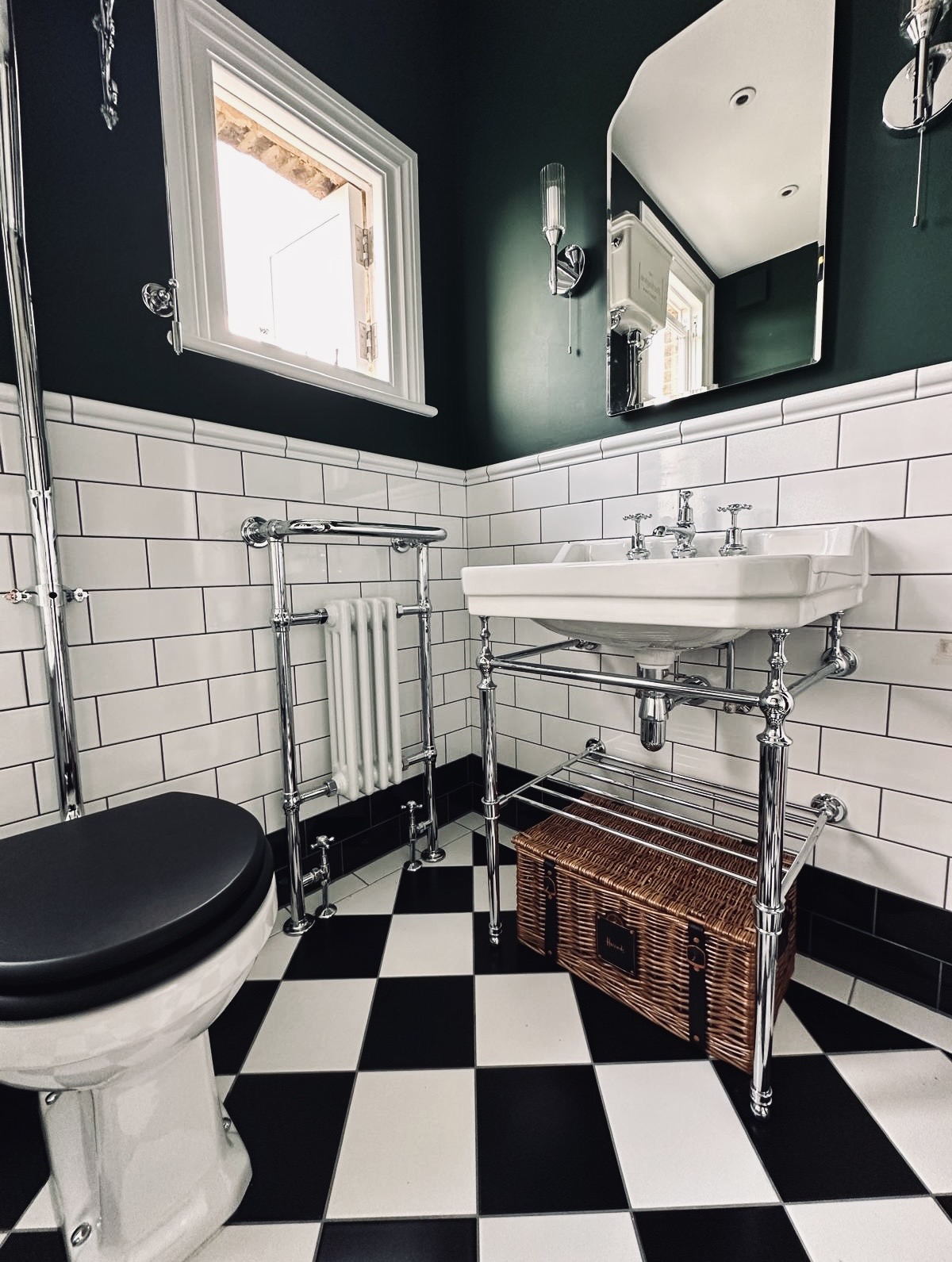
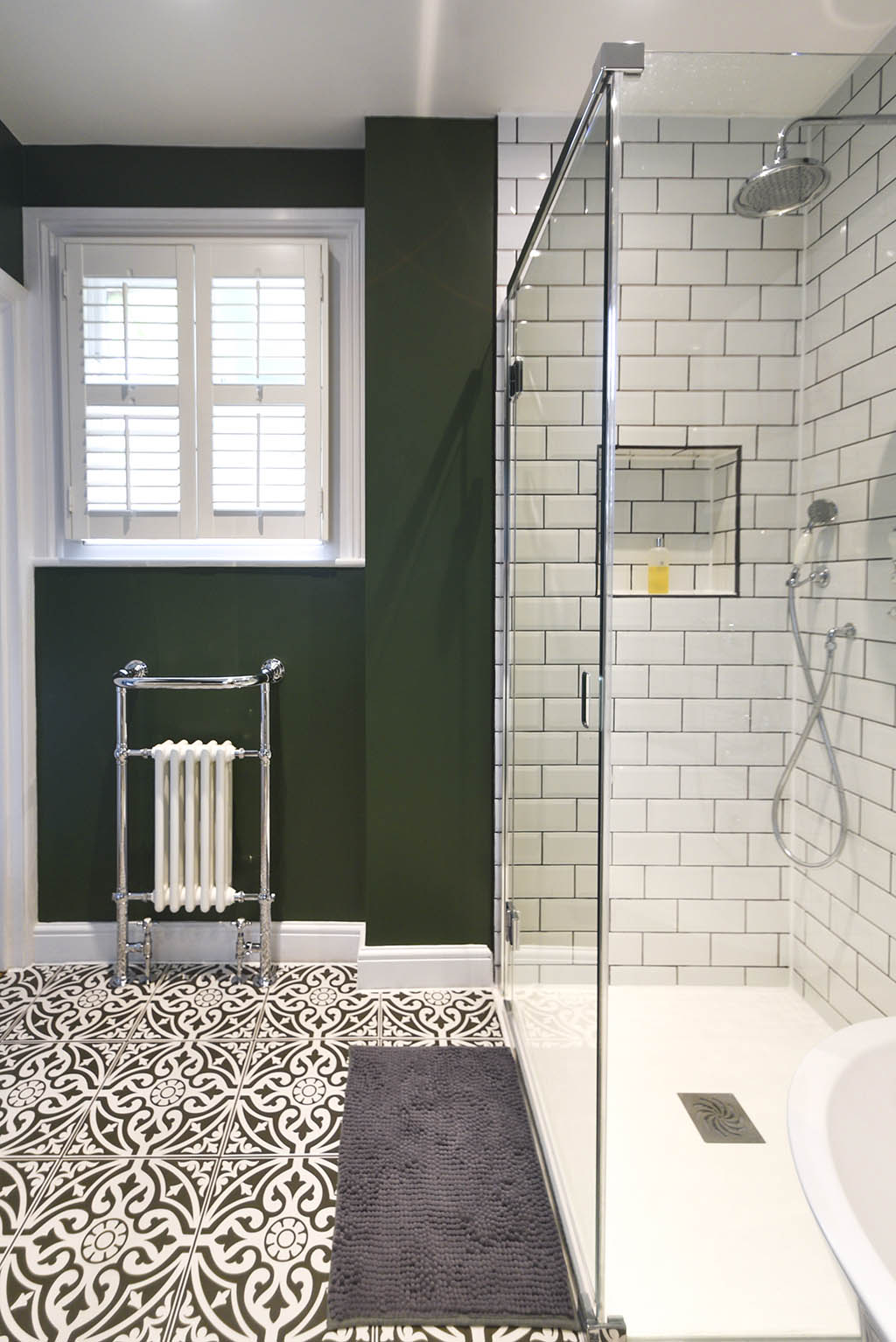
Victorian tiles are one of the most defining elements of heritage bathroom designs, with endless opportunities to add authentic character and pattern. Traditional geometric black and white floor tiles, like those used in one of our previous Victorian bathroom renovations, are timeless and elegant, while encaustic tiles have intricate patterns that add richness and colour.
If you want something that’s easy to maintain and works well with any colour scheme, metro or subway tiles with contrasting grout are a Victorian staple that remains practical for walls and wet areas like around sinks and showers. Add decorative border tiles for a distinctly Victorian approach.

Period-Appropriate Fixtures and Fittings
Sanitaryware that honours Victorian aesthetics requires attention to proportion, material, and detailing. High-level cisterns with pull chains are the most authentic choice for toilets, while modern internal mechanisms ensure reliable performance, and pedestal sinks with ornate detailing suit a Victorian bathroom renovation perfectly.
For showers, traditional shower enclosures with exposed pipework and large rainfall heads tat echo Victorian bathing luxury while still providing that spa feel that many of us want from a bathroom. Brass or nickel fixtures capture period authenticity better than modern chrome in most settings and work well with a range of colour schemes.
Colour Schemes and Lighting
Victorian colour palettes are the final finishing touch to a successful bathroom renovation. While white dominated Victorian bathrooms, it was typically paired with rich jewel-toned accent colours or dramatic black details.
A few suggestions that work with this era are deep burgundy, emerald-green, or deep navy for walls or woodwork, balanced with white bathroom fixtures. Wood panelling, whether it’s original or a reproduction, adds warmth and authenticity to any bathroom too, and can work well in smaller bathrooms where bold colours might be overwhelming.
When it comes to lighting, decorative wall sconces either side of ornate mirrors, statement chandeliers where ceiling heights permit, and pendant lights over baths create atmospheric illumination that honours Victorian luxury while still remaining practical. The result is a Victorian bathroom that feels both sympathetic to the period and contemporary.
Get in Touch
No two period homes are the same, and that’s the charm of them. While some benefit from small tweaks here and there, others demand a complete renovation to reimagine the room for modern life. In either case, preserving the character and originality of these spaces is essential to respecting the heritage of the building.
At Hugo Oliver, we take a bespoke approach to each home so we can get to know your requirements and deliver a personalised service that’s based on your ideas and your home. Get in touch to arrange a consultation or visit our design studio to collaborate with our designers and create your perfect Victorian bathroom.


